Showing posts with label NICU Parent Support. Show all posts

Tuesday, April 14, 2009

Comfort a Grieving Parent by Sending a Sympathy Card

Many times we do not fully understanding the importance of sending a sympathy note until we have personally experienced the benefits of receiving condolence notes from friends and family following the death of a loved one.

Sending of sympathy cards links people together and reinforces a sense of community and solidarity in the wake of the calamity of death.


Send Condolences with a Sympathy Card
Sending a Sympathy card is a simple gesture of support that provide meaning to both senders and receivers.
Sympathy Cards and Condolence Notes are a very popular way to express one's sympathies in the United States. Sending a Sympathy Card to a grieving parent can be very helpful in the healing process.

The death of a child, no matter what age, is always a difficult loss for parents to bear. The death of a baby is particularly difficult. For many parents the death of a child is the death of their hopes and dreams for the future.

An Example of A Sympathy Card for a Neonatal Death
People may not send Sympathy Cards because they don't know what to write. This example of a Sympathy Card is one that could be sent to acknowledge the sudden death of baby as a Miscarriage or later with a Stillbirth or Neonatal Death.

Dearest Laurie & Mark,

I was saddened to hear of the sudden loss of your baby.

I know you have been excitedly planning for his arrival. It must make things very difficult to say "Hello" and "Good-bye" on the same day.

I will be thinking about you both during this difficult time and sending my heartfelt sympathy.

I have seen you handle difficult challenges in the past and wish you the strength to make it through this challenging time.

You are both in my thoughts,

____________ (Your Signature)

When to Send a Sympathy Card
A
Sympathy Cards is a way to quickly acknowledge a loss once you have heard about it. In these situations you can write a brief personal note on commercial condolence card or insert a brief hand-written note into a hand-crafted card.

Traditional etiquette standards recommended that you follow up the short note with a condolence letter later.

One Mother who experienced a miscarriage noted:
A card or note is a wonderful way of letting them know that you care and that you are thinking of them. It can be a great source of encouragement and support.
You can find out more about How to Write a Sympathy Card, How to Write a Condolence Note or How to Write a Condolence Letter in the articles that I have published on these topics on Squidoo.

More Information:
Dyer K. 2008. How to Write a Condolence Note. Squidoo.com
Dyer K. 2008. How to Write a Condolence Letter. Squidoo.com
Dyer K. 2008.
How to Write a Sympathy Card. Squidoo.com

Lippy, Charles. "Sympathy Cards and the Grief Process." Journal of Popular Culture 17, no. 3 (1983):98–108.

Image Source: © Kirsti A. Dyer. Some Rights Reserved.

Tuesday, November 18, 2008

NICU Parent Support CarePages

CarePages recognized that staying in touch with loved ones and friends while also managing a healthcare challenge can be difficult. But staying connected is a crucial component to getting, and staying well—for both patients and caregivers.

The NICU Parent Support CarePages allows you to stay connected with family, friends and colleagues before, during and after a healthcare challenge through a unique CarePages website.

CarePages provides free, private websites that make it easy to:

  • Update family, friends and even colleagues all at once
  • Share photos
  • Collect supporting messages from loved ones and friends
  • Learn more about healthcare issues
  • Connect to others with similar concerns
CarePages unique service allows you to create a personal, private web page to help family and friends communicate when a loved one is facing a challenge at the beginning of life as a newborn.

A CarePage is a great way for NICU parents to easily keep their loved ones updated on their NICU baby's condition.

For More Information

Saturday, March 29, 2008

The Zaky - A Comforting Hand for Your NICU Baby

To this day one of the hardest things for me in having a NICU baby was not being able to stay with her and watch over her 24 hours a day 7 days a week.

We had a 2-year-old daughter who also needed our care and attention, so could visit for some time during the day, but had to leave her behind in the care of others in the ICN.

One of the best ideas that I have found for helping support a NICU baby and support the NICU parent is the Zaky ergodynamic hand pillow. The Zaky Infant Pillow is a way to simulate mother's or father's hand to provide comfort to your NICU baby when you are not able to do so.

Uses for the Zaky
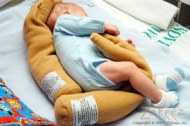
By mimicking the shape, weight and touch of a human hand, the Zaky is able to provide comfort, support and a sense of security to NICU babies. The Zaky can also be used in the NICU to assist with positioning the babies (see image above).

The Zaky
has been used to care for NICU Babies by mothers, fathers and family members, neonatologists, pediatricians, surgeons, obgyns, nurses, physical & occupational therapists, infant massage therapists, developmental specialists & ergonomists. The Zaky has been used in NICUs since 2001.

The Zaky
The Zaky is now available on Amazon in different hands and in different colors for you to get for your NICU Baby or give to your favorite NICU parent. Click on the image or the text link to learn more about the Zaky.

Right Handed Zaky

The Zaky Positioning Pillow - Right Hand

Left Handed Zaky

The Zaky Positioning Pillow - Left Hand

Pink Zaky

The Zaky Bonding Hand - Pink

Blue Zaky

The Zaky Bonding Hand - Blue

More on the Zaky
Dyer KA. The Zaky - A Bonding Hand from Zakeez inc. Squidoo.com
Dyer KA. Leave a Zaky hand with Your NICU Baby - Providing Comfort When You are Not There. July 2007. NICU Parent Support Blog.

More on Remembering out NICU Experience
Dyer KA. March 2008. An Easter Healing Blessing in the Intensive Care Nursery. NICU Parent Support Blog.
Dyer KA. March 2008. Creating a Circle of Healing and Support. NICU Parent Support Blog.

Photo Source: Zakeez.

Saturday, March 22, 2008

Encouraging Message: Advice from a NICU Physician on Coping with the NICU

Leonard E. Weisman M.D. Director of the Perinatal Center at Texas Children's Hospital offered these encouraging words about coping with the NICU experience:

    It's a day-to-day kind of thing..
    There are days when things go well.

    There are days when things don't go well.

Leonard E. Weisman M.D.

It is my hope that you have more days when things go well than days when things don't.

Photo Source: Ayhan Yildiz. Calendar. Royalty Free Use.

Saturday, January 26, 2008

What You Can Say or Do for a NICU Parent

When a baby has been admitted to the NICU, family and friends can fear saying or doing the wrong thing so much that they don't do or say anything at all; this is not helpful for a NICU parents who could use support during a difficult time.

Well-meaning friends and family members want to be able to say something that can somehow make it better, or do something that can ease their distress.

Read on to discover some helpful suggestions of what to say and what to do for the parents when a baby gets admitted to the NICU from a parent who's been in the NICU and has also offered advice to other NICU Parents and others facing challenging times.

Say Something to Show Your Support
Pick one of these various suggestions, or modify one so it feels more like something you would say. If finding something to say still doesn't seem to work, then you can let the person know verbally or in writing that you are there for them.

Some of my personal favorites include:
  • I am sorry for your loss.
  • I wish you didn't have to experience this.
  • I am sorry that this happened to you.
  • I am thinking of you during this difficult time. (usually written)
  • I'm so sorry.
  • I wish this hadn't happened to you.
  • I wish things had turned out better for you.
  • I wish the news had been different.
What can I *say* to a NICU Parent?
People often fear so much saying the wrong thing that they often don't say anything at all. A grieving parent would like to know that family and friends are there to support them during this difficult time of loss.

I think that most of the time words spoken from the heart even if they don't feel perfect will generally be remembered as heart-felt support.

If you aren't sure what to say, you can start by sending a card and letting them know you are thinking about them.


What can I *do* for a NICU Parent?
You may also make specific offers of help to the overwhelmed NICU Parents. Ask:

  • What can I do for you?
  • How can I help?
  • What would be the most helpful for you right now?

NICU parents are often in a state of shock, especially initially and have difficulty making simple decisions. Instead of asking what you can do, you may want to make specific offers e.g. picking up other children, bringing food, helping or doing the shopping, calling family members and then have the parents tell you if that is something they need.

What else can I *do* for a NICU Parent?
Two very helpful things you can *do* to support a NICU parent are to listen and to just be.

Listen
One of the most important things you can *do* for a grieving NICU parent is to give him or her your presence. The ability to listen can be a great source of comfort. Listening communicates respect, caring and empathy.

Sometimes all a parent may needs is someone who will truly and emphatically listen to their NICU story. Really listening involves being present for the person, not interrupting and staying connected and focused on what he or she is saying.

Simply Be
Simply sitting and listening to their NICU story, being a witness to their stress and anxiety can help provide invaluable support for a overwhelmed parent.

Invite the NICU parent for a cup of coffee or tea at the hospital cafeteria or nearby coffee shop.

Spending a few quiet moments in silence, holding a hand can be a very effective way to convey your support and caring.


Best Gifts for a NICU Parent
Remember that two of the greatest gifts you can give to a NICU parent are the gift of listening and the gift of your presence.

Do not underestimate the healing presence yourself and of really listening to someone who is going through a difficult experience.

Note: This is a slightly modified version of the article "What to Say or Do for a NICU Parent" published on the Type-A Mom site.

Sources:
Image Sources: Laura Glover. Holding Hands. Matthew Hains. Coffee Shop in Black and White. Pipps Outlet Center. All Royalty Free Use.

Friday, September 14, 2007

CarePages - Connect, Share, Care

NICU Parent Support has paired up with CarePages to give our viewers their own place online to create a page to connect, share and care during challenging times. Visit the custom NICU Parent Support CarePages to get started.

What is a CarePage?
A CarePage is a personal, private web page that can be used by family and friends to stay connected and enhance communication when a loved one is facing a long-term illness or at the end of life.

Using a Care Page
Creating a CarePage can be a way of generating support, providing information and updates easily. I think the greatest benefit may be that of holding the loved one in everyone's thoughts so they can do better and get healthy, or feel the love and support of family at the end of life.

You can use our custom NICU Parent Support CarePages to keep family connected when a loved one is facing a challenging illness, or at the end of life.

For More Information

Sunday, August 26, 2007

8/26 - Encouraging Message - Believe and Follow Your Aspirations

This message of encouragement comes from Lousia May Alcott, author of "Little Women" a reminder to believe in our highest aspirations.
Far away there in the sunshine
are my highest aspirations.
I may not reach them
but I can look up
and see their beauty,
believe in them,
and try to follow them.


Louisa May Alcott
As a parent, we hold the highest aspirations for our child(ren) and dream of their beautiful future. This message of encouragement is a helpful one to remember and to hang on to during the times when it may be difficult to believe.

Keep looking up, keep believing and keep following those dreams.


Photo Source: Manoel Silva.
Clouds. Royalty Free Use.

Add to Technorati Favorites


Tuesday, August 14, 2007

Introducing the NICU Parent Support Audio & Podcast Channel

I am pleased to announce that the NICU Parent Support Audio & Podcast Channel is available now for your listening.

The channel has already been described as a "useful and comforting guide" and "a very powerful creation" one that should be of significant assistance to NICU families.

I created the NICU Parent Podcast Channel as part of a course that I took this summer on Podcasting for Teaching through the @ONE's Online Courses.

About the NICU Parent Support Audio & Podcast Channel
The NICU Parent Support Audio & Podcast Channel is a series of audio messages of information, Support and encouragement for parents and families who have babies in the Neonatal Intensive Care Unit (NICU) or the Intensive Care Nursery (ICN).

This audio channel is a collection of audio messages that provide information, encouragement, support and comfort for NICU parents. Some of the recordings are longer, more informative episodes; other episodes are shorter, recorded messages of encouragement, support and comfort.


The Channel Line Up
The NICU Parent Support Audio & Podcast Channel has 5 episodes so far. Each episode also has a downloadable PDF file of the transcript for the episode that you can read along with the audio message.
  • Episode 1: Introduction to the NICU Parent Support Audio and Podcast Channel
  • Episode 2: Dreaming New Dreams after Picking up the Pieces of Broken Dreams
  • Episode 3: Searching for Answers to the Difficult Questions
  • Episode 4: A Special Healing Blessing - Version 1: Tibetan Bowls, Chimes & Bells
  • Episode 4: A Special Healing Blessing - Version 2: Traditional Lullaby
The plan is to get a collection of podcasts that parents can listen to one daily during the early days of the NICU for information, encouragement and support.

Subscribing to the NICU Parent Support Audio or Podcast
You can subscribe to the NICU Parent Support Audio & Podcast Channel in one of three ways:

On iTunes: You can subscribe to the NICU Parent Audio & Podcast on iTunes by clicking on the iTunes icon to the left, on this link, or on the iTunes icon in the Blog sidebar.


As a RSS Feed: You can also subscribe to the feed for the NICU Parent Audio & Podcast Channel by clicking on the Feed icon to the left or on this link or the Channel's RSS Feed in our Blog sidebar.

As a WebPage with Links: You can directly pick which audio message and/or pdf files you want to listed to by visiting the webpage for the NICU Parent Support Audio & Podcast channel that lists out all of the available episodes.


For More Information or to read reviews visit the NICU Parent Support Site Audiocast page.

Add to Technorati Favorites

Monday, August 13, 2007

8/13 - Comforting Message - Hope Makes the Present Moment Less Difficult

A simple message today from Thich Nhat Hanh:
Hope is important because
it can make
the present moment
less difficult to bear.

If we believe
that tomorrow will be better,

We can bear a hardship today.
Thich Nhat Hanh


It is my hope that by providing you with information, resources and support on the NICU Parent Support site that you will find some hope, so that the present moment, the present situation you may be experiencing with your NICU baby will be easier to bear.

May you come to believe your tomorrow be better than today.

Other Resources on "Hope"
Dyer K. Asking Why and Finding Hope. June 17, 2007. NICU Parent Support Blog.
Dyer K. Pitter Patter: A Message of Hope from a Former Preemie. June 9, 2007. NICU Parent Support Blog.

Photo Source: Alexander Abolinsh.
ONE... TWO... FREEDOM!!! Royalty Free Use.

Add to Technorati Favorites

Sunday, August 12, 2007

8/12 - Encouraging Moment - Riding the NICU Roller Coaster Ride

The NICU experience is often described by many parents as a roller coaster ride. It is a series of highs and lows, ups and down, times that are exhilarating, uplifting and exciting, followed by times when all you can do is close your eyes and hang on for dear life.

I think it is helpful for parents to realized that they are in for a series of ups and downs, hopefully more ups than downs during their NICU time.

Riding the NICU Roller coaster
This passage comes from Dianne I. Maroney, a NICU Nurse, NICU Parent and owner of the website premature-infant.com. She describes the Roller coaster ride of the NICU:
For years I had been telling parents,

"Having a baby in the NICU is a roller coaster ride."


Although accurate, the analogy pales beside the reality.

The range of emotions is beyond imagining.

There is the moment of joy
when she opens her eyes peacefully,
followed by panic at the slightest hint of trouble.
You can read more from her article on "Helping Parents Survive the Emotional "Roller Coaster Ride" in the Newborn Intensive Care Unit" published on the Prematurity.org site

Photo Credit: Peter Hamza. Rollercoaster. Royalty Free Use.

Add to Technorati Favorites

Thursday, August 9, 2007

Big Near-Term and Sick Newborns are the Majority of the NICU Admissions

Even though people associate the (NICU) Neonatal Intensive Care Unit with premature babies, near-term babies, the fact is that those babies who are closer to term (40 weeks) are often the ones most frequently admitted.

We get this all the time when I mention my daughter was in the NICU. "Oh, she was a preemie?" "No. She was a Sick Newborn."

Definitions
Near-term infant - a newborn closer to term (40 weeks), often between 34 and 36 weeks or born roughly four or five weeks before his or her estimated due date.

Late preterm infant - Near-term infant

Premature baby - a newborn born before 34 weeks

Sick Newborn - Newborns that are near term or term infants who require Intensive Care intervention for a variety of problems or diseases.
Some near-term or sick newborns experience complications from oxygen deprivation during delivery or wet lungs after a Cesarean section.

Big NICU Babies

According to an article on near-term babies, Dr. Kenneth Herrman, neonatologist and medical director of newborn services at Deaconess Women's Hospital at Riley Hospital for Children in Evansville, IL:
The big babies, closer to term, are the majority, and they stay for the shortest amount of time.

If you would walk through the nursery on any particular day, you would have the impression the NICU is filled with premature babies because they stay a disproportionately longer amount of time.
Our daughter was not a preemie, she was a sick newborn diagnosed with PPHN, or Persistent Pulmonary Hypertension of the Newborn. She required supportive ventilation on a respirator because of high pressure in the lungs and ended up in the NICU.

Combing the Internet for Resources on Sick Newborns
It took me several days after our daughter was hospitalize in the NICU to find online resources for parents of sick newborns since most of the online resources, organizations and online groups are for parents of preemies. This was extremely frustrating for someone used to finding information quickly online.

Thankfully I stumble upon the helpful resources about Sick Newborns written by neonatologist, Dr. Jane E. Brazy and her colleagues at the University of Wisconsin. Over the years, these resources for Sick Newborns are ones that I continue to refer to for my NICU articles. The excellent resources are now being hosted by Meriter Health Services.

Sources
Keeling L. Near-term babies at the NICU suffer from deceptive weakness. June 11, 2007. Evansville Courier & Press.
Rubin R. 'Near-term' unease grows. USA Today. October 9, 2005.
Brazy JE. et. al. Sick Newborn Health. Meriter Health Services.

Image:
Matt & Janet Dustin. All her machines at the NICU. Creative Commons License.

Friday, August 3, 2007

Creatively Coping: Preemie Prayer Pockets

Laurie Anderson of Southern Stitches has created a beautiful idea for NICU Parents and their family and friends. You can create a Preemie Prayer Pocket as a gift for parents, family, friends and nurses to wear and think about your baby or other NICU babies. It is a wonderful idea of creatively coping with the NICU.

Preemie Prayer Pocket

The tiny footprints on the design were taken from a 14-week old baby weighing 3 oz. You can download the instructions on her website. Follow the directions to create the pocket, enclose the preemie prayer, or any other message.

To simply attach a pin to the back for wearing, or use baby diaper pins if you want something more decorative.

The Prayer for the Preemie Pocket
Preemie Prayer Pockets have an prayer enclosed within the pocket.

Prayer for the Prayer Pocket

If you have worries, fears and tears
for this tiny baby, held so dear,
just tuck them in this little heart…
Angels will take them to God above
and He will comfort you with His healing love.
When you come back later and peek inside.
You will see there's nothing left to hide…
for God's love will forever abide.
Once you get the Preemie Pocket Prayer, you can write down your own concerns and stick them in the pocket.

Note:

The preemie patterns are to be used only for charity sewing for preemies, no sales are allowed.
The designs and instructions themselves are copyrighted and all rights remain with Laurie Anderson/Southern Stitches

Designs © Laurie Anderson, Southern Stitches. The designs are for charity use only. No sales are allowed.

Source:
Anderson L. Preemie Prayer Pockets. Threads of Love. Southern Stitches. http://www.southern-stitches.com/preemie.html

Other Resources on Prayer Pockets:
Prayer Pockets. Forum. Martha Pullen.com. Sewing Made Easy.
http://forums.marthapullen.com/read.php?f=10&i=1704&t=1313

Sunday, July 22, 2007

7/22 - Encouraging Message - Balancing on a Tight rope and Gratitude in the NICU?

I stumbled upon this quote and realized it perfectly expresses many of the sentiments and emotions felt by NICU Parents:

Walking this tight rope called life
learning to balance
and look down to see
if the net is there yet...
Liz Elayne


Many NICU parents keep looking for the net as they carefully and delicately balance family, work and other life demands with the reality of having a baby in the Neonatal Intensive Care Unit.

Another interesting note was that this post was taken from a series of posts where the author was taking a polaroid photo every single day, counting the days and marking the passage of time; something else frequently done by NICU Parents.

Gratitude in the NICU?
In her blog, for each of these entries, the author also has included a few words about the moment and lists the things she is grateful for, perhaps a difficult task, but something else that NICU parents might be able to do.

One of my favorite quotes that helped me get through our NICU experience was one by Socrates:

If all misfortunes were laid in one common heap
whence everyone must take an equal portion,
Most people would be contented to take their own and depart.

While sentiments may not work with all NICU Parents and in every situations, I know with my daughter, we were constantly grateful, looking at other situations faced by some of the other parents, that things could have been so much worse.

For that we have always been very grateful.

Source:
Elayne L. Day 71. March 12, 2007. http://seekgratitude.blogspot.com

Photo Source: Modified Microsoft Images.

Add to Technorati Favorites

Saturday, July 21, 2007

New Designations - Healthcare/Medical Blogger & Type-A Mom Writer

My diverse background is surfacing in the two new designations that we are getting for the NICU Parent Support Blog. I am honored to be attaining both of these designations.

Healthcare Blogger

The first designation as a Medical Blogger or officially a "Healthcare Blogger" comes from my background as a physician.

This designation is meant for healthcare workers who blog (the initial intent of the code of ethics).

The full code of ethics for the Healthcare Bloggers can be found on the Medical Blog Code website.


Type-A Mom Writer

The other designation comes from my background as a mother, a sometimes Type-A personality and as a NICU Parent.

I am an "Official Type-A Mom Writer" contributing to their special section for NICU Parents, blogging on finding "Restoring Moments."

I will be contributing articles and information on various aspects of health and well-being of children.

Add to Technorati Favorites

Monday, July 16, 2007

7/16 - Comforting Moment - Death does not end the Relationship

The recent thoughts regarding death and bereavement have shifted. In the past death was viewed as something one needs to "let go of" and "get over" in order to move on with life.

More recently, experts have come to realize as in the quote below, that death may end a life, but it does not end the relationship.
Death ends a life, not a relationship. One of the real challenges at this time of bereavement is to create a new relationship with your loved one without a physical presence.

You face the task of creating that new relationship, one of heart, mind and spirit.

Incorporating your loved one’s values and passions into your own life and
passing them on to others will create a living memorial that will keep alive the essence of your loved one and bring you comfort.

Playwright Robert Anderson
Tuesdays with Morrie

Many people find ways, often creative, to keep the memory of a loved one alive as a source of comfort. This article that I published several years ago includes some of the many ways of coping:

Other Quotes:
Living on in the Hearts
All that you deeply love

Source:
Bereavement Guide. 2006. Pathways Hospice Foundation. Available at:
http://www.pathwayshealth.org/documents/Pathways_Bereavement_Guide.pdf

Add to Technorati Favorites

Sunday, July 15, 2007

7/15 - Encouraging Message - Believe and Follow Your Aspirations

For NICU parents, trying to keep on believing and hoping that your NICU baby will be fine can be difficult. Lousia May Alcott's quote is a beautiful reminder to follow your highest hopes for your baby.

Far away there in the sunshine are my highest aspirations.

I may not reach them

but I can look up and see their beauty, believe in them,

and try to follow them.

Louisa May Alcott


Photo Source: Manoel Silva. Clouds. Royalty Free Use

Add to Technorati Favorites

Thursday, July 12, 2007

Leave a Zaky hand with Your NICU Baby - Providing Comfort When You are Not There

I think one of the most difficult things for NICU parents to do is to realize that they cannot stay with their NICU baby 24/7 and at some time you have to leave the hospital and your precious baby behind.

I discovered a wonderful product designed by a former NICU Parent that helps provide support and comfort to a NICU baby while you are not there -
The Zaky®.

This product is an answer to the questions "What can I do to support my NICU baby?" I know we would have gotten one for our daughter had they been around at the time.

About the
The Zaky®
The Zaky® was designed by a NICU parent, Yamile Jackson, who has a PhD in ergonomics & human factors engineering after her own NICU experience with her son Zachary in 2001.

The award-winning ergonomic, bonding, therapeutic positioning pillow was designed
especially for premature babies that have to be left at the hospital away from their parents.

The special hand allows you to "leave a hand with a loved one" and "give your baby a hand" when you are not there.

By mimicking the shape, weight and touch of a human hand, the Zaky
® provides comfort to NICU babies (and others) giving support and a sense of security. In the NICU setting, the Zaky® can be another helpful hand assisting with positioning.

Providing Comfort When You are Not There
Here is a list of some of the comforting benefits provided by this
ergonomic, bonding, therapeutic positioning pillow.
  • The size and weight simulates the hand and touch of the mother.
  • It may be used on top, around and under the baby to provide boundaries (except on the face).
  • Babies feel reassured as if someone is touching them, which assists in their need of feeling protected.
  • It assists nurses and care givers as she can leave a Zaky® with each baby.
  • Parents feel as they are leaving one hand with their baby, helping them feel more involved in the care of the patient.
  • May be warmed in the towel warmer at hospitals and on the dryer at home.
In addition the Zaky® can be scented with the scent of mom, dad, or siblings. Scenting the Zaky® can provide a great deal of comfort and assist the baby's transitions to different environments in the hospital, in the car or once at home. The Zaky® is something constant and helps to reduce the shock many baby's experience with different lighting, scents, sounds, temperature, etc.

Uses - NICU and Others
The Zaky
® has been used by mothers, fathers and family members, neonatologists, pediatricians, surgeons, obgyns, nurses, physical & occupational therapists, infant massage therapists, developmental specialists & ergonomists. It has been used in NICUs since 2001 and in homes and child care facilities since 2004.

In addition to being used in the NICU setting, the Zaky
® is also being used to provide comfort in other settings:
  • In hospitals for children and adults that have long hospital stays due to cancer, burn treatments and others.
  • In child care centers and at home for children to use as a comforting security item.
  • In hospitals to help position patients after surgical procedures.
  • In nursing homes to provide comfort and a sense of security to seniors.
Oboz Program - Donate a Zaky® to Your NICU
This is a great idea. The Zakeez company has already
donated over 2,000 Zakys to NICUs worldwide to help their sickest children. They donate the Zaky® to the hospital that you specify and all you have to do is pay for minimal administration fees, shipping and handling. You can donate a Zaky® to your NICU for $7.98.

More about the Oboz Program: http://www.zakeez.com/en/our_company/oboz_program.php

Research
The Zaky® has been presented at several conferences on"Human Hand Mimetic Comforts High Risk Neonates" and "The benefits of the Zaky for mothers, babies, and medical personnel." http://www.zakeez.com/en/our_company/research.php


Ordering Information for NICU Parents:
I have included the prices when the blog was posted. The Zaky comes as a right hand or as a left hand.
From the Zaky site - Is there a difference between the Right and the Left Hand?
  • There appears to be no difference for the baby.
  • Right and left hands are offered because it looks more natural to have one of each if they are use on the same baby.
  • Some parents have preferences--if they are right handed, they want a right Zaky, if they use their left handed, they want a left hand.
  • Many parents choose to get the Zaky in the hand that they use the most to provide comfort for their baby, which may not always be their dominant hand.

More Sources:

Premature Benefits: http://thezaky.com/en/zaky/premature_benefits.php
Research:
http://www.zakeez.com/en/our_company/research.php
Zaky Movie: http://thezaky.com/en/zaky/zaky_jjmovie.php

Photo Source:
Zakeez

Add to Technorati Favorites

Wednesday, July 11, 2007

Palliative Care in the NICU - Ethical Dilemmas: A Role for Paralytics & Who is the Patient?

On July 11, 2007 a neonatologist in the U.K. was cleared of misconduct in the case of hastening the deaths of two dying babies. In the final moments before the baby's death, Dr. Munro injected the babies with a paralyzing drug, pancuronium, at 23 times the normal dose to suppress agonal breathing.

This case being described as being "tantamount to euthanasia" is something to think about. It underscores many of the ethical dilemmas surrounding end-of-life or palliative care in the NICU finding the delicate balance between saving a life and merely prolonging a life until it's inevitable death.

Definitions
Palliative care are services that alleviate, lessen, or provide relief of symptoms which interfere with quality of life when curative treatments are no longer an option with a life-threatening illness.

Paralytics and Palliative Care?
My Palliative Care or End-of-Life background is in adult medicine, but the principles of 'doing no harm' and support someone, even a newborn, with comfort until the end of their life should be the same.

I don't remember paralytic agents being routinely used at the end of life with adults. I do remember an attending physician, a critical care doctor briefly sharing his own horrifying experiences under general anesthesia, anesthesia awareness. He described being paralyzed, awake and unable to let anyone know because of the medications he'd been given.

One of the concerns in these cases is that the two dying babies might have been paralyzed, still awake and unable to breathe. As Nurse Judy noted
"We have no way of knowing if those babies were suffering before he gave them the Pavulon, we have no way of knowing if they had any relief from suffering. They may have been totally aware of being unable to breathe."
Not a pleasant thought, to have someone suffocate to death because of medications.

According to the National Cancer Institute Ethical Issues on Last hours of Life, "paralytic agents have no analgesic or sedative effects, and they can mask patient discomfort." In a study done in the late 1990's in the U.K. looking at the practices surrounding withdrawing a dying child from a ventilator, a minority of the respondents continued neuromuscular paralysis after the child had been withdrawn. In a more recent BMJ article from 2002, that looked at the topic of whether agonal respirations are necessary, these physicians proposed that gasping respirations at the end of life should be treated and in rare circumstances "
the use of neuromuscular blockade to suppress prolonged episodes of agonal respiration in the well-sedated patient in order to allow a peaceful and comfortable death."

Perhaps this is a difference in the training between the U.S. and the U.K, perhaps it is a difference in the research being done. I think most of all the case underscores the need for still more education in palliative care in the NICU setting. This training would include beneficial and effective ways of managing pain and symptoms in the final hours of life as well as developing standard protocols for NICU physicians to follow to allow for the peaceful and comfortable death.

Who is the Patient - the Baby or the Family?

Another issue in this case, is who was the patient...the baby being treated, or the parents who will be surviving the deaths. In both of these cases reportedly the mothers and fathers of the babies "fully supported the doctor's actions and were grateful to him."

Nurse Geena's comments in response to the parents fully supporting the doctor serve as a reminder to be thinking who is being treated.

Goody for them, but I just can't quite get it out of my mind that the "treatment" was done to comfort the parents and not the baby.
It almost seems that the parents, those who would be living on after the death, had become the primary focus for the doctor, not the dying baby.

Which is more harmful for the parents? Prolonging Death or the Method of Death.
How one copes with a death depends much on how the death was handled at the time. The ultimate outcome of this case will be the effect of these deaths on the surviving parents.
  • Will they be more grateful that their baby's suffering ceased and the death was hastened?
  • Will they be more harmed because the drugs used hastened their baby's death paralyzed their baby?
We may never know.

Other Bloggers' Thoughts:
Judy, RN. Pancuronium = Pain relief? For whom?
Tigers Don't Jump Blog. July 10, 2007.
Geena, RN. On the verge of what society finds acceptable? Code Blog. July 10, 2007.
Kevin, MD. Prolonging life vs prolonging death. Kevin MD. July 10, 2007.

Sources:

BBC News. Doctor 'hastens babies' deaths.' July 5, 2007.
http://news.bbc.co.uk/2/hi/uk_news/scotland/north_east/6273528.stm
BBC News. Doctor felt babies were suffering. July 9, 2007.
Available at: http://news.bbc.co.uk/2/hi/uk_news/scotland/north_east/6276900.stm
BBC News. Baby doctor cleared of misconduct. July 11, 2007. Available at:

http://news.bbc.co.uk/2/hi/uk_news/scotland/north_east/6291224.stm
Reid. M. When prolonging life becomes prolonging death. July 9, 2007. Times Online.
http://www.timesonline.co.uk/tol/comment/columnists/guest_contributors/article2045207.ece
National Cancer Institute. Last Hours of Life (PDQ®). Health Professional Version. Last updated. June 6, 2007.
Hatherill M, Tibby SM, Williams C. March MJ, Murcoch IA. Withdrawal of ventilation from the dying child. Clinical Intensive Care. 1997. 8;5:222-227.

Perkin RM, Resnki DB. The agony of agonal respirations: is the last gasp necessary?
Journal of Medical Ethics. 2002;28:164-169.
http://jme.bmj.com/cgi/content/abstract/28/3/164

Additional information:
Dyer KA. My NICU Baby is Dying: Now What? Available at:
http://www.squidoo.com/marchofdimes/mynicubabyisdying
Dyer KA. My NICU Baby had Died: Now What? Available at: http://www.squidoo.com/mynicubabydied/
Carter BS. Bhatia J. Comfort/palliative care guidelines for neonatal practice: development and implementation in an academic medical center. Journal of Perinatology. 2001. Jul-Aug;21(5):279-83.
Full article available at: http://www.nature.com/jp/journal/v21/n5/abs/7210582a.html

Carter BS. Ethical Issues in Neonatal Care. eMedicine.
Available at: http://www.emedicine.com/PED/topic2767.htm

Add to Technorati Favorites

Tuesday, July 10, 2007

What can I *do* when a NICU baby dies?

The death of the fourth sextuplet prompted the Blog entry on "What can I *say* when a NICU baby dies?" This entry included several helpful suggestions for what you can say.

This blog is a follow up to the
"What can I *say*" entry with helpful suggestions for "What you can *do*."

What can I *do* when a NICU baby dies?
Two very helpful things you can *do* to support a NICU parent who has lost a baby are to listen and to simply be.

Listening Helps
According to research, doctors on the average interrupt 20 seconds after their patient begins to speak. With the hurried pace everyone seems to be keeping these days, I would think that people often interrupt each other at close to a similar rate. For someone trying to tell their NICU story of loss, listening can be a true gift.

One of the most important things you can *do* for a grieving NICU parent is to give him or her your presence. The ability to listen can be a great source of comfort. Listening communicates respect, caring and empathy. Sometimes all a parent may needs is someone who will truly and emphatically listen to the story of grief. Really listening involves being present for the person, not interrupting and staying connected and focused on what he or she is saying.

Sitting with a NICU parent, listening to the NICU story, being a witness to the pain and sorrow can help provide invaluable support during times of duress.
Spending a few quiet moments in silent contemplation, holding a hand is another effective way to convey your sympathy and support.

Advice on How to Listen
There are several different versions of this inspirational poem on listening. I have pulled one that I thought had the best message and referenced the others under Resources.

There are also several short articles in the references on characteristics of good listening and listening tips from a communication studies course, if you need to practice your attentive listener skills.

Listen

When I ask you to listen to me, and you start giving me advice,
You have not done what I asked.

When I ask that you listen to me, and you begin to tell me why I shouldn't feel that way,
You are trampling on my feelings.

When I ask you to listen to me, and you feel you have to do something to solve my problems,
You have failed me, strange as that may seem.

Listen.
All that I ask is that you listen,
Not talk or do - just hear me.

When you do something for me
That I need to do for myself,
You contribute to my fear and feelings of inadequacy.

But when you accept as a simple fact
That I do feel what I feel, no matter how irrational,
Then I can quit trying to convince you
And go about the business
Of understanding what's behind my feelings.

So, please listen and just hear me
And, if you want to talk,
Wait a minute for your turn - and I'll listen to you.

Source: Author Unknown. Listen. Westhartford Counseling Center.
http://westhartfordcounselingcenter.com/listen.htm


Just Be
Another helpful resource to share with a friend who is hurting, is your presence and your full attention.

Be yourself and relate person to person.
Be ready to listen again and again.
Be respectful.
Be aware of feelings and non-verbal cues.
Be present.
Be comfortable with silence.
Be human.
Be genuine.
Most of all--Be there.
© Kirsti A. Dyer, MD, MS

Remember that two of the greatest gifts you can give to a NICU parent are the gift of listening and the gift of your presence.

Do not underestimate the healing presence yourself and of really listening to someone who is going through a difficult experience.


Other Resources:
Chadwick. N. Please Listen. http://www.1stholistic.com/prayer/hol_prayer_please-listen.htm
Nickerson LS. 2007. Characteristics of Good Listening. Listening and Understanding: Communication Studies. University of Idaho. http://www.webpages.uidaho.edu/~lnicker/page28.html
Nickerson LS.
2007. Listening Tips. Listening and Understanding. Communication Studies. University of Idaho. http://www.webpages.uidaho.edu/~lnicker/page28.html
Author Unknown. Please Listen to Me. Communication Studies. University of Idaho.
http://www.webpages.uidaho.edu/~lnicker/page29.html

Sources:

CBS Broadcasting Inc. June 25, 2007. 4th Sextuplet Born To Minn. Couple Dies. Available at: http://wcco.com/topstories/local_story_176160040.html
Dyer KA. What can I *say* when a NICU baby dies?. June 2007. Available at: http://nicuparentsupport.blogspot.com/2007/06/what-can-i-say-when-nicu-baby-dies.html
Dyer KA. Comforting Moment - It's Only Words... June 2007. Available at:

http://nicuparentsupport.blogspot.com/2007/06/611-comforting-moment-its-only-words.html
Dyer KA. Identifying, Understanding, and Working with Grieving Parents in the NICU, Part II: Strategies. Neonatal Network. June/July 2005; 24: 27-40.
Quill TE. Arnold RM. Platt F. "I Wish Things Were Different": Expressing Wishes in Response to Loss, Futility, and Unrealistic Hopes. Ann Intern Med, Oct 2001; 135: 551-5. Available at: http://www.annals.org/cgi/content/full/135/7/551

Add to Technorati Favorites